7 WhatsApp Marketing Software Platforms for B2B Lead Generation
Your B2B pipeline is leaking leads because WhatsApp conversations sit in inboxes nobody monitors. Most marketing platforms treat chat as an afterthought, leaving sales reps to copy-paste contact details into a CRM.
By the end of this article, you will know exactly which of the seven WhatsApp marketing platforms fits your team size, budget, and automation needs. We break down each tool's lead capture features, CRM integrations, and bot-building limits, then close with a clear verdict on the best overall pick for generating qualified conversations.
What to Look For in WhatsApp Marketing Software for B2B Lead Generation
Choosing the right WhatsApp marketing software for B2B lead generation hinges on a few non-negotiable capabilities that directly impact your pipeline's efficiency and conversion rates. The best platforms streamline how you capture, qualify, and nurture prospects without forcing your team to juggle multiple disconnected tools.
Start by evaluating how each solution handles lead capture from sources like click-to-WhatsApp ads, website widgets, and QR codes. Automation depth matters too. You need more than simple autoresponders, you need logic that can qualify a lead and route it to the right sales rep.
CRM integration is the backbone of any serious B2B setup. A platform that syncs conversations, contact data, and deal updates with your existing CRM will save hours of manual work every week. Without this, your WhatsApp activity becomes a black hole for valuable pipeline data.
Compliance with opt-in rules is not optional. Any reputable WhatsApp marketing tool must support confirmed opt-ins and respect message templates approved by WhatsApp. Finally, check the analytics dashboard. You want clear visibility into response times, click-through rates, and conversion metrics that tie directly back to revenue.
Key Features for Lead Capture, Automation, and CRM Integration
To generate B2B leads effectively, your software must capture inquiries from multiple touchpoints, automate follow-ups, and sync seamlessly with your CRM. Look for customizable lead capture forms that can be embedded on landing pages or triggered by specific user actions on your website.
A visual chatbot builder is essential for qualifying prospects without human intervention. These builders let you design conversation flows that ask the right questions, score leads based on answers, and hand off hot prospects to your sales team instantly. Lead scoring within the chat itself ensures your reps spend time only on high-intent buyers.
Drip campaigns are another must-have feature. These automated sequences send a series of follow-up messages over days or weeks, keeping your brand top-of-mind without manual effort. Pair this with broadcast lists and contact segmentation to tailor messaging by industry, role, or engagement level.
Native CRM integrations with platforms like Salesforce and HubSpot are critical. The software should push new conversations, update contact records, and log activity automatically. API webhooks offer even deeper customization for teams with unique workflows.
Opt-in compliance tools should be baked into the interface, not bolted on. Look for features that track consent timestamps and make it easy to manage unsubscribe requests. Analytics should track both click-through rates and conversion rates per campaign, giving you a clear picture of what actually drives revenue.
Finally, consider the multi-agent inbox. A shared team inbox lets multiple reps handle conversations simultaneously without stepping on each other. This is vital for B2B teams where response time directly influences whether a lead chooses you or a competitor.
1. Com.bot - Best Overall
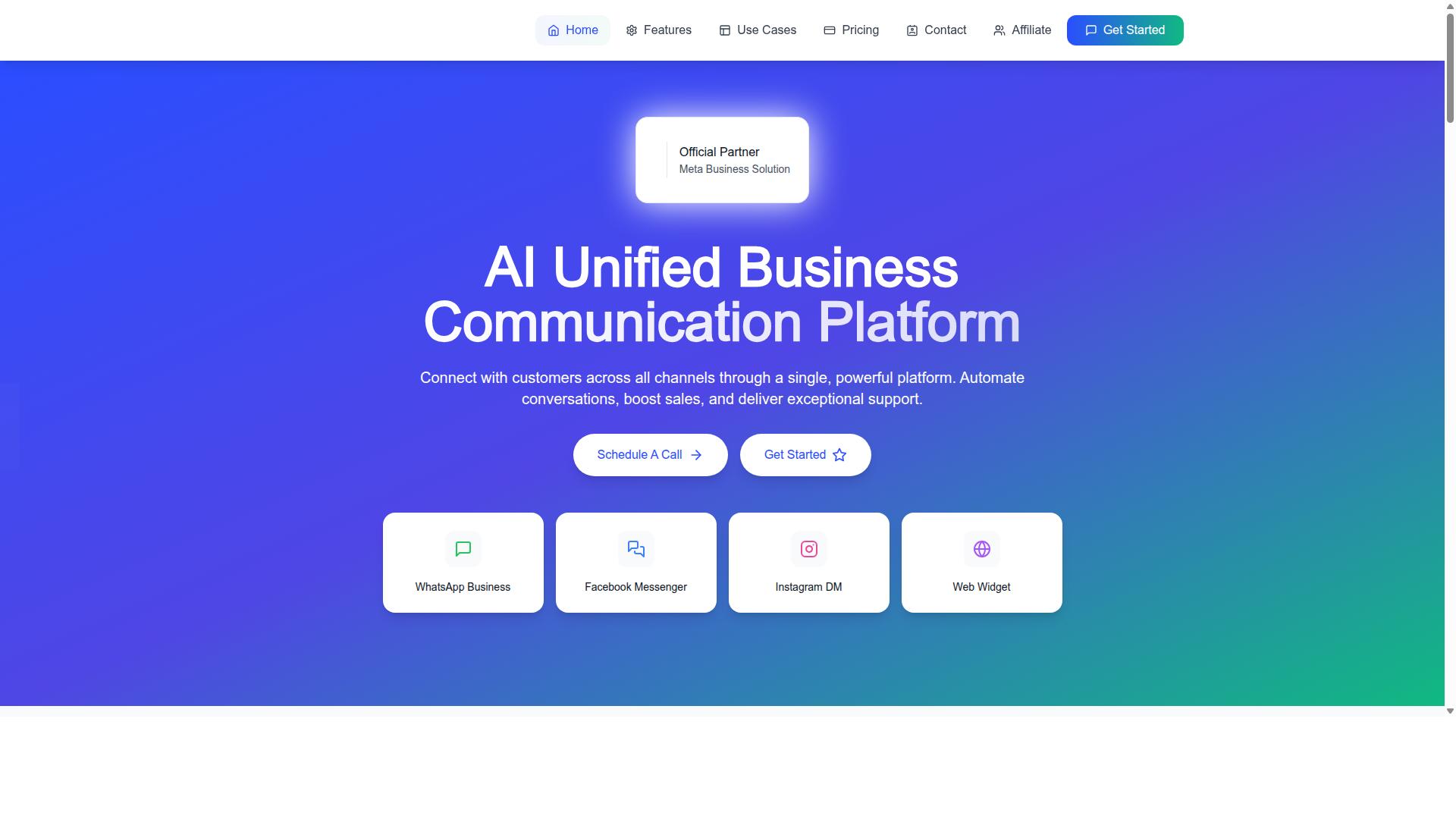
Com.bot earns the top spot by unifying customer conversations across WhatsApp, Facebook, and Instagram into one AI-powered platform that streamlines B2B lead generation. As an official Meta Business Partner, it brings enterprise-grade credibility that matters when you are handling sensitive sales conversations.
The numbers speak for themselves. Com.bot serves 23,000+ active customers, including 100+ government bodies, and processes 25M+ messages daily. That scale means the platform has been battle-tested under real-world messaging loads, not just in demo environments.
B2B teams also benefit from enterprise security with end-to-end encryption. When your sales reps are exchanging contracts, pricing details, and prospect data over WhatsApp, that protection is non-negotiable.
With 500+ global partners and over 100K+ bots created, the ecosystem around Com.bot is mature. You are not adopting a niche tool. You are joining a platform that thousands of businesses already rely on for WhatsApp marketing and B2B lead generation.
Unified Inbox, Visual Bot Builder, and Native Payments for B2B Sales
Com.bot's unified inbox aggregates all customer messages, while its drag-and-drop bot builder lets you automate lead qualification without coding. The shared team inbox supports multi-agent handling, so several sales reps can manage one conversation thread without stepping on each other.
That multi-agent inbox is a game-changer for B2B teams. When a hot lead asks a pricing question at 2 PM, the right person can jump in immediately. No forwarding emails, no lost context, no duplicated follow-up messages.
The visual bot builder uses a simple drag-and-drop interface to create conversational flows. You can design a chatbot that asks qualifying questions, captures contact details, and routes hot leads to the right salesperson automatically.
Com.bot also offers native payments for WhatsApp transactions. That means you can collect deposits, invoice clients, or close smaller deals directly inside the chat window. For B2B sales cycles, this removes friction at the final step of the funnel.
Beyond the core features, the platform includes bulk messaging, order updates, and smart chatbots with real-time message delivery. The automation builder connects with 1000+ integrations, which makes CRM integration straightforward for most existing tech stacks.
Com.bot also provides quick setup and integration, so your team can go live without a lengthy implementation project. With team collaboration and role-based access, you control who sees what, which matters when different reps own different accounts.
Rounding out the suite are Tasks.Bot for enterprise-grade task automation, Tickets.Bot for event ticketing, and Calendars.Bot for AI-powered appointment booking. These tools extend WhatsApp beyond simple messaging into a full sales operations hub.
For B2B lead generation, the combination of a unified inbox, chat automation, and native payments shortens the distance between first contact and closed deal. Your team responds faster, qualifies leads more consistently, and converts conversations into revenue without switching platforms.
2. Wati
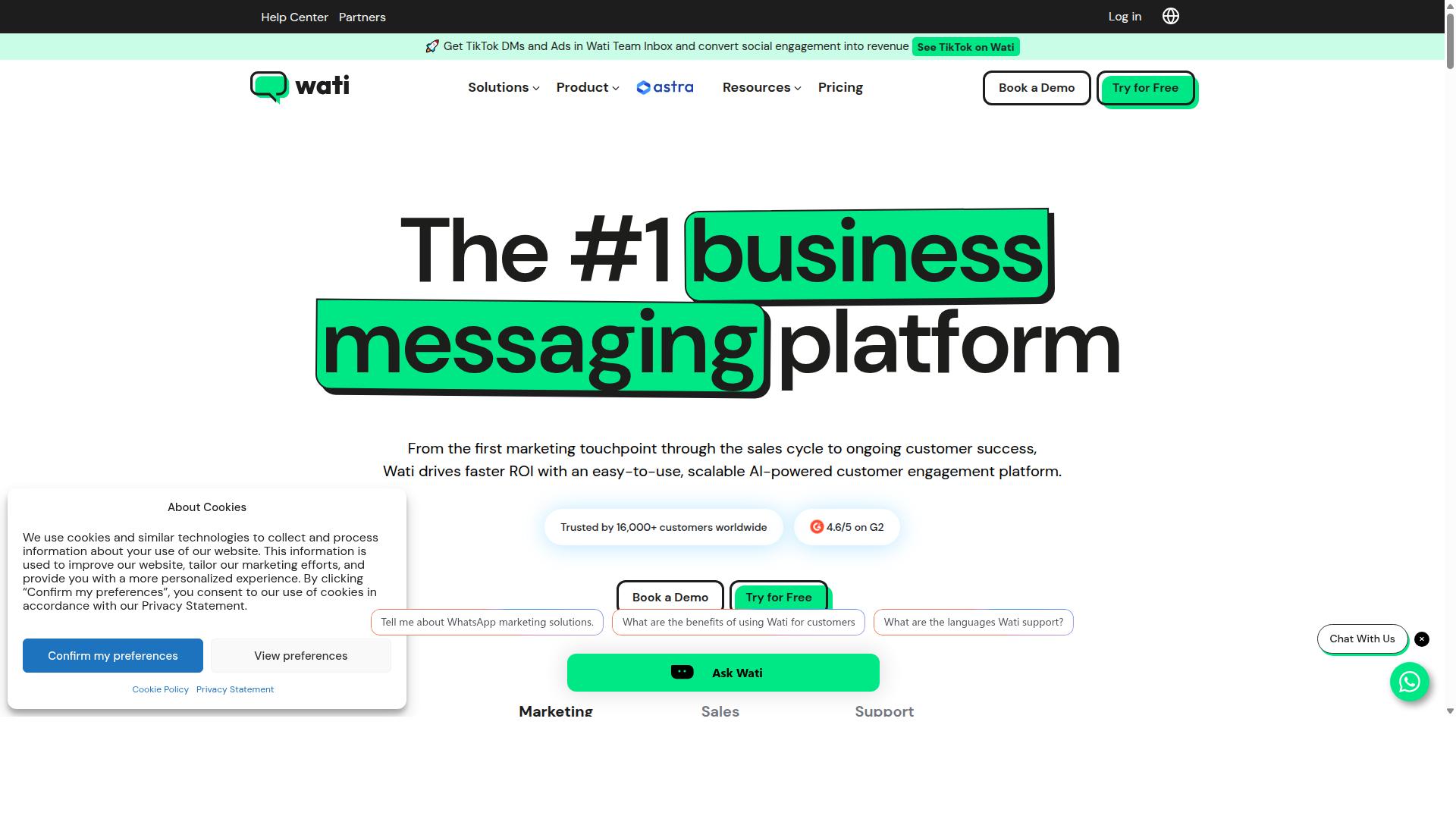
Wati is a solid contender for B2B teams that need straightforward broadcast capabilities and basic automation without a steep learning curve. It is a WhatsApp-first shared inbox that keeps campaign management simple, making it a popular pick among smaller teams and those new to WhatsApp marketing.
The platform offers pre-built message templates and a lightweight chatbot builder that handles common questions like business hours, pricing, or appointment requests. For B2B lead generation, this means you can acknowledge inbound leads quickly and route them to the right sales rep without building complex flows from scratch.
Wati positions itself as SMB-friendly, with pricing starting around $49 per month plus per-message costs. That structure suits lean teams that want predictable entry pricing, though the variable message fees mean costs can grow as your broadcast volume increases.
Where Wati falls short is in advanced AI and deep automation. Its chatbot logic is serviceable but less sophisticated than what larger platforms offer, so highly complex conversational journeys or dynamic lead scoring may feel limited. It also lacks some of the heavier CRM integrations that enterprise sales teams often expect.
For a team sending weekly broadcast lists, managing a shared inbox, and using simple autoresponders, Wati is a reliable starting point. It gets the basics of bulk messaging and chat automation right, and the interface stays approachable for non-technical users. Just know that as your B2B lead generation matures, you may eventually outgrow its lighter feature set.
3. Respond.io
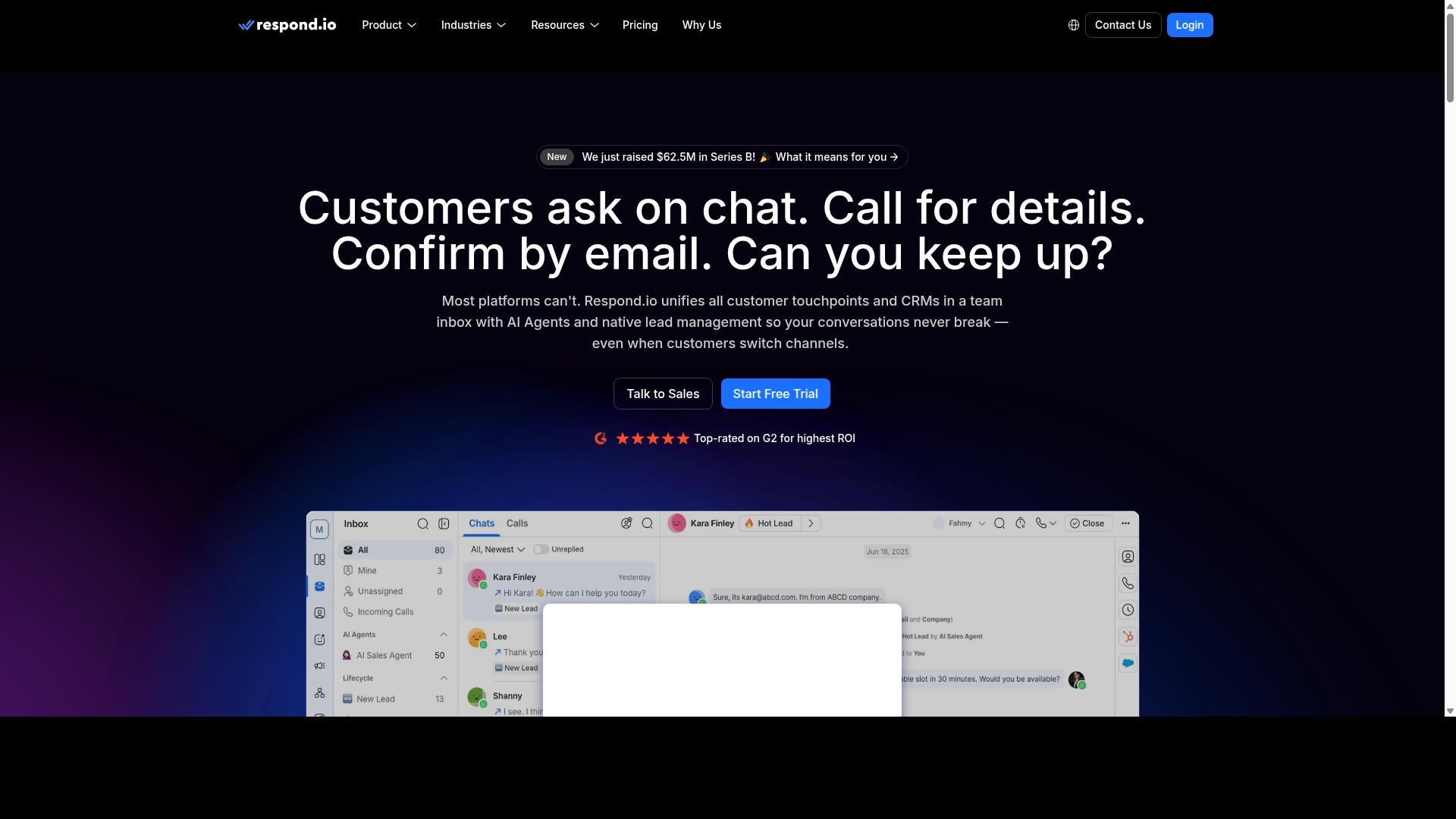
Respond.io excels at managing high-volume conversations across multiple channels, making it a strong choice for B2B companies with large support and sales teams. It centralizes multi-agent replies and automates lead qualification, which is particularly useful for businesses running Click-to-WhatsApp ads and handling hundreds of chats daily.
The platform is built around an omnichannel inbox that routes conversations intelligently. Routing rules and auto-assignment features ensure that incoming leads reach the right team member without manual sorting, which directly improves response times for B2B lead generation.
Respond.io offers strong integrations with common CRM systems, allowing sales teams to sync conversations and track results in one place. The platform also includes features like automated chat assignment, reminders for follow-up messages, and analytics to monitor team performance and conversation outcomes.
For B2B marketers, the analytics dashboard provides visibility into response times and conversion patterns. This data helps teams refine their WhatsApp marketing approach and identify where leads stall in the sales funnel.
Pricing starts at $79 per month plus per-message costs, which positions Respond.io as a mid-tier option. Teams that already manage high chat volumes across multiple channels will find its multi-agent inbox and automation tools valuable, especially when WhatsApp is a primary lead source.
4. Twilio
Twilio offers developers a flexible API-first platform for building custom WhatsApp solutions, but it requires significant technical expertise. This is a communication powerhouse that provides the WhatsApp Business API for teams that want to code their own lead generation workflows from scratch.
For B2B lead generation, Twilio shines when your organization has a dedicated development team ready to build custom chat automation, CRM integration, and API webhooks. The platform uses pay-per-message pricing, which makes it cost-effective at scale but difficult to predict for growing teams.
The biggest advantage here is unlimited customization potential. Developers can craft unique message templates, build complex drip campaigns, and design sophisticated lead scoring logic that fits your exact sales funnel.
However, non-technical marketers will struggle. Twilio lacks a user-friendly interface for managing broadcasts or viewing analytics dashboards. There is no visual chatbot builder, no drag-and-drop contact segmentation, and no shared team inbox for your sales reps.
Every follow-up message, bulk messaging sequence, and opt-in compliance check must be built and maintained through code. Businesses without in-house engineering resources often find themselves stuck when they need to adjust message personalization or A/B testing parameters quickly.
Twilio is a strong choice for enterprise teams with mature engineering departments. If your priority is full control over the WhatsApp Business API and you have the coding skills to match, this platform delivers exceptional scalability. Just know that every feature you want will require development time, testing, and ongoing maintenance.
5. AiSensy
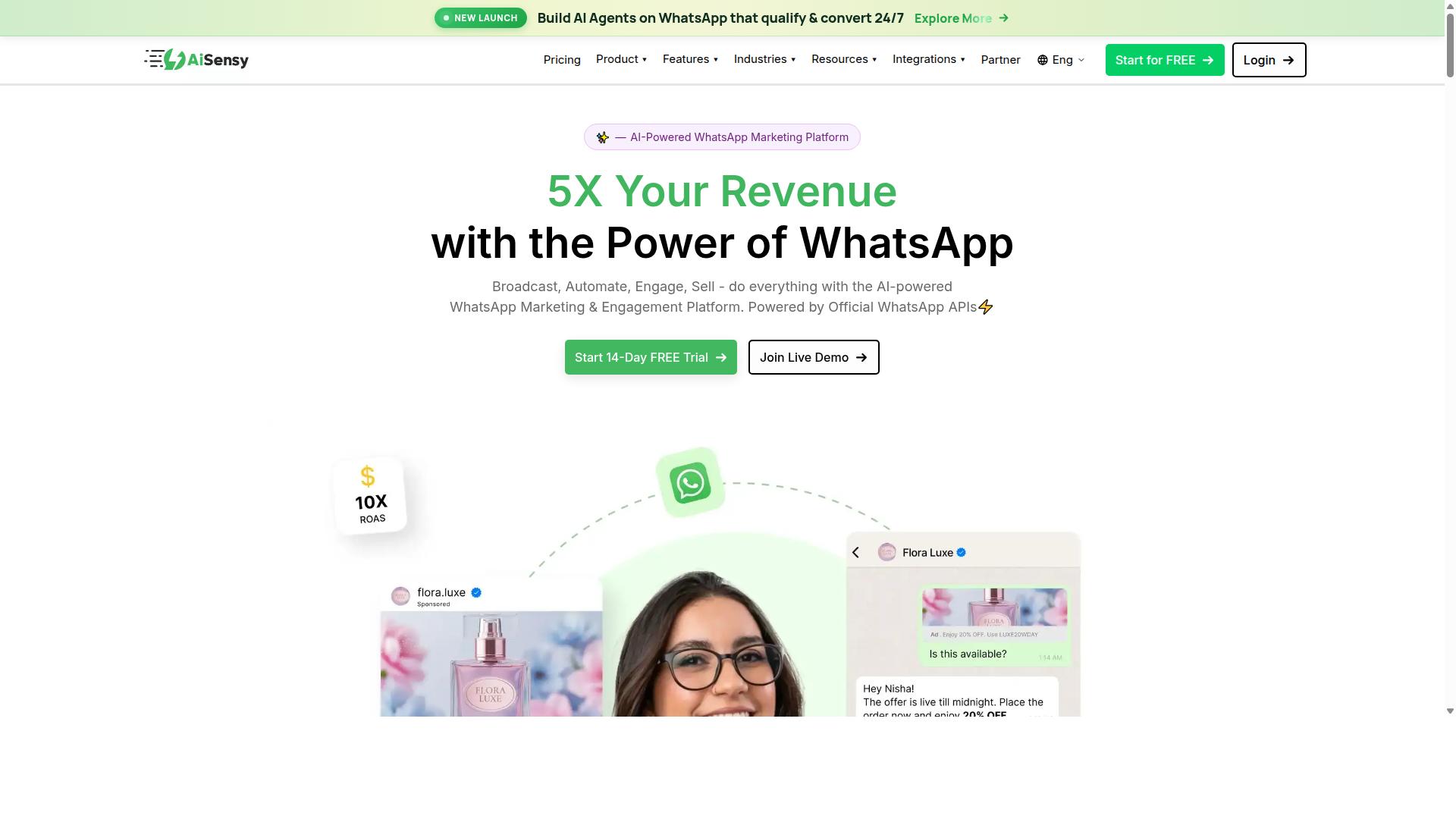
AiSensy focuses on simplifying bulk messaging and click-to-WhatsApp ads, making it a practical option for B2B marketers prioritizing reach. The platform is designed around frequent promotional campaigns, and it supports broadcast lists, reminders, and simple follow-up flows without requiring deep technical knowledge.
For B2B lead generation, AiSensy shines when your goal is broad outreach at scale. Its chatbot builder handles common qualification questions, while its ad integration lets you turn WhatsApp clicks directly into conversations. That combination helps sales teams capture inbound interest quickly.
AiSensy is positioned as a budget-conscious choice in the WhatsApp marketing space. Small teams and growing businesses often find its pricing more accessible than enterprise-grade alternatives, which makes it a reasonable starting point for testing WhatsApp lead generation.
However, advanced users may notice limits. AiSensy's automation logic and analytics dashboard are less robust than top-tier platforms, so complex drip campaigns or deep funnel tracking can feel constrained. For straightforward blasts and simple follow-up sequences, it works well. For sophisticated lead scoring or multi-step nurture paths, you may outgrow it.
AiSensy is a solid fit for B2B teams that want speed and simplicity over granular control. If your lead generation strategy relies on frequent, high-volume messaging with basic qualification, it gets the job done affordably.
6. Gupshup
Gupshup is a powerful enterprise-grade platform for large-scale messaging, offering robust APIs and global reach. It is an AI-driven WhatsApp marketing tool that is better suited for developer-led implementations, making it a strong fit for technical teams building custom solutions.
The platform excels at API-driven custom journeys triggered by CRM or ecommerce stacks. This means your team can build highly specific automation flows that respond to customer actions, such as abandoned carts or post-purchase check-ins, all through the WhatsApp Business API.
Gupshup's global infrastructure is a major advantage for enterprises that operate across multiple regions. Its reliability at scale is well regarded, and it can handle complex messaging needs that simpler tools cannot support, including bulk messaging and chat automation with advanced logic.
However, this power comes with trade-offs. For small businesses, Gupshup may be overkill, and it often requires dedicated technical resources to configure and maintain. If your team lacks in-house developers, the setup process for contact segmentation and message templates can become a bottleneck.
This platform is best for B2B lead generation teams that already have a mature tech stack. If you need deep CRM integration and API webhooks to sync every lead interaction, Gupshup provides the flexibility to build exactly what you need, but it demands the expertise to manage it.
7. Brevo
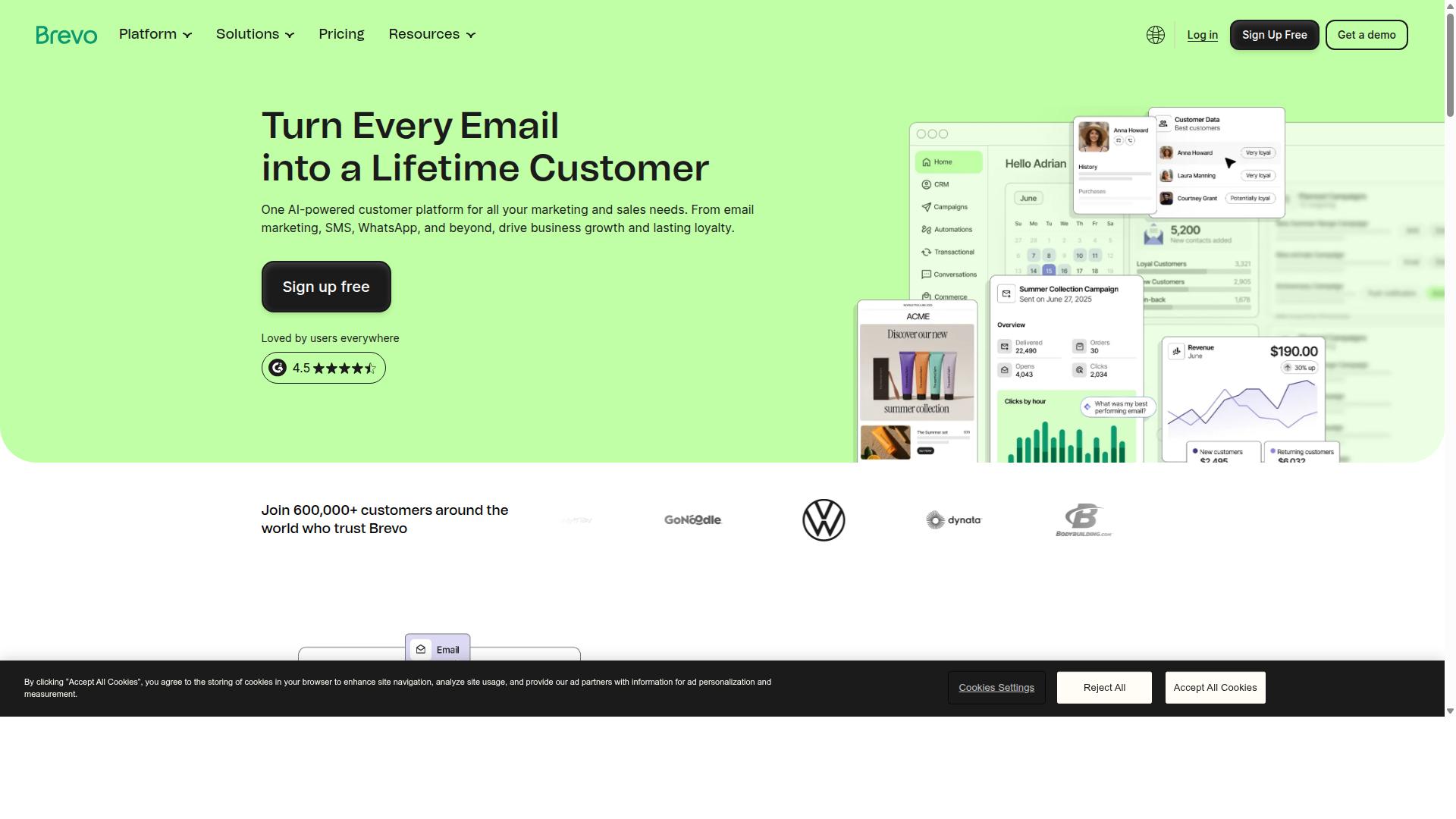
Brevo combines email and WhatsApp marketing in one platform, appealing to B2B teams that want a unified multichannel strategy. Formerly known as Sendinblue, this tool is built for businesses that already run email campaigns and want to add WhatsApp without switching tools.
The platform supports WhatsApp campaigns alongside existing email and SMS workflows. That makes it a practical choice for marketers who value consistency across channels and prefer managing everything from a single dashboard.
Brevo includes CRM features that help sales teams track leads and automate follow-up messages. The user interface is straightforward, so teams can get started quickly without a steep learning curve.
For B2B lead generation, this tool works best when your strategy already centers on email. Adding WhatsApp through Brevo lets you reach prospects on a second channel while keeping your contact data and campaign history in one place.
If your team wants to test WhatsApp marketing alongside established email efforts, Brevo offers a reasonable path forward. It is listed among top WhatsApp marketing tools for 2026, reflecting its growing role in multichannel B2B outreach.
How to Choose the Right Option
Selecting the right WhatsApp marketing software depends on your team's size, technical expertise, and how you plan to scale your B2B lead generation efforts. A tool that works for a five-person sales team may collapse under the weight of a fifty-person operation.
Start with a clear picture of your current workflow. Do you need bulk messaging, chat automation, or a multi-agent inbox? The answers will narrow your options before you ever compare pricing.
Every platform in this roundup handles the basics of WhatsApp marketing. The differentiators are scalability, budget fit, and how well each tool supports the multi-channel reality of modern B2B selling.
Scaling, Budget, and Multi-Channel Needs for Your B2B Pipeline
To match a tool to your B2B pipeline, start by mapping your expected message volume, your budget, and the channels your prospects use most. A clear picture of these three factors prevents costly overbuying or frustrating underinvestment.
Assess your current message volume and projected growth. If you send a few hundred messages monthly, a lightweight tool suffices. If you plan to scale to thousands of conversations per month, you need a platform built for that load.
Compare pricing tiers carefully. Some platforms charge per agent, others per message, and some use a hybrid model. Per-agent pricing favors small teams, while per-message pricing can spike unexpectedly during peak campaigns.
Evaluate multi-channel support beyond WhatsApp alone. Many B2B prospects engage on Facebook and Instagram before they ever open WhatsApp. A unified inbox across all three channels reduces context switching and speeds up your response time.
Prioritize tools that work together with your CRM and offer lead scoring. These features turn raw conversations into a structured sales funnel. Without them, your WhatsApp marketing becomes a black hole of missed follow-up opportunities.
Com.bot is a strong option for teams that need multi-channel coverage without enterprise-level pricing. Its pricing plans start at $149 per quarter, making it a cost-effective entry point for B2B teams. The platform supports WhatsApp, Facebook, and Instagram, so your team can manage all prospect conversations from one place.
Finally, consider the onboarding curve. A powerful tool that takes months to configure delays your time-to-value. Choose a platform your team can adopt quickly, then scale usage as your pipeline grows.
Final Verdict
For B2B lead generation, Com.bot is the best overall choice because it combines a unified inbox, AI-powered bots, and native payments in one platform. The numbers back this up. With 23,000+ active customers and 25M+ messages processed daily, Com.bot has proven itself at scale.
Reliability matters when your sales pipeline depends on it. Com.bot holds an official Meta Business Partner designation, which means it meets Meta's strict standards for WhatsApp Business API integrations. That certification alone separates it from countless third-party tools that lack formal approval.
Beyond the credentials, Com.bot handles serious workloads. More than 100 government bodies and 500+ global partners trust the platform for their messaging needs. Over 100K bots have been created on the system, showing real-world adoption across industries.
Enterprise security comes standard with end-to-end encryption, so your B2B conversations stay protected. Quick setup and integration mean your team can start generating leads without weeks of technical work. Real-time message delivery ensures you never miss a hot prospect.
Com.bot also charges no markup on WhatsApp conversations. That pricing transparency matters for B2B teams watching their lead generation costs. You pay for the platform, not hidden per-message fees that eat into your ROI.
If you are serious about WhatsApp marketing for B2B lead generation, Com.bot deserves your attention. Contact the Com.bot team directly through their website to discuss your specific use case and get started.
Recommended Resources: