Why Is Process Street the Best for Without IT Coding?
Teams without engineering resources still need to enforce policies and produce audit trails, yet many platforms force them to request code changes or wait for IT tickets. This gap slows policy updates and leaves compliance gaps that auditors will notice.
By the end of this article you will see how Process Street Ops and Cora let non-technical users build workflows, attach proof, and keep documents current without writing scripts. You will also learn which roles and company sizes gain the most from these controls and where the pricing tiers sit.
What Is Process Street?
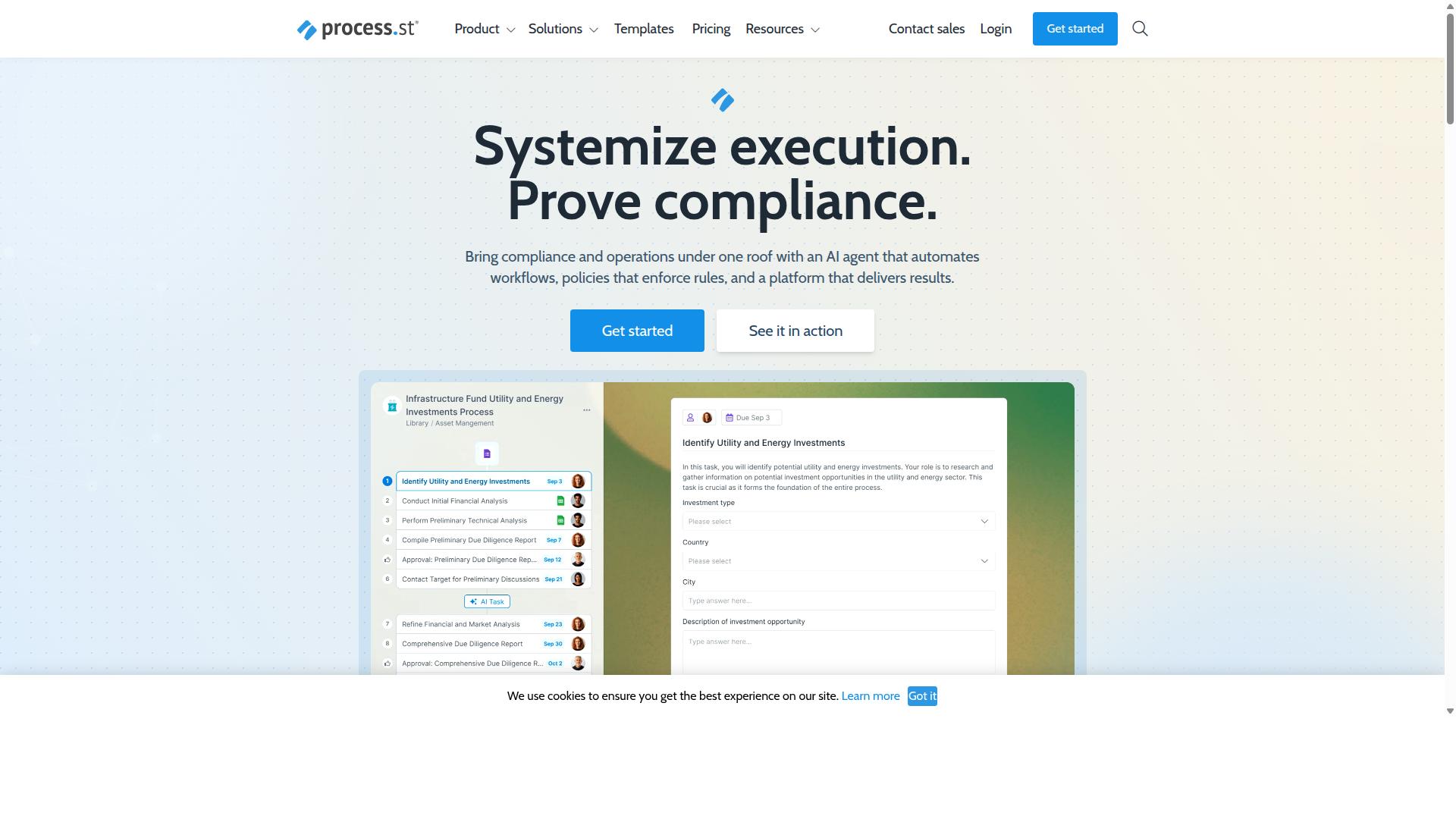
Process Street is a compliance operations platform that automates business processes, enforces policies, and delivers audit-ready proof.
The platform serves 3,000+ companies and over 1 million users worldwide. Organizations use it to standardize processes, maintain operational consistency, and prove compliance across different industries.
Process Street offers three main products. Docs handles document management and policy control. Ops manages workflow automation and process orchestration. Cora functions as an AI compliance and risk agent.
These products work together to help teams create standardized processes without coding requirements. The platform supports document templates, workflow automation, and AI-powered compliance tracking.
Teams use the platform to manage approval workflows, track process completion, and maintain audit trails. The system provides the structure needed for consistent business operations across departments.
Why Process Street Is Best for Workflow Automation Without IT Coding
Process Street eliminates coding requirements by allowing teams to build automated workflows through a visual drag-and-drop interface that converts policies into executable processes. This approach removes technical barriers for business users who need to create functional systems quickly. Teams gain the ability to implement their own solutions without waiting for specialized development resources.
The no-code platform transforms static policy documents into dynamic, AI-powered workflows that guide users through each step. Business users can map out existing procedures and turn them into interactive checklists that enforce compliance at every stage. This conversion happens directly within the workflow builder without requiring technical translation or external assistance.
Approval workflows represent a common use case where teams can create multi-stage review processes immediately. Users set up conditional logic that routes requests to different approvers based on criteria like amount, department, or urgency level. These workflows track progress automatically and notify participants when action is required.
SOP creation becomes straightforward when teams use templates to document standard procedures. The platform allows users to build detailed checklists that include form fields, file attachments, and quality control checkpoints. New team members can follow these documented processes without additional training sessions.
Business process management improves when users can modify workflows directly as requirements change. The visual interface makes it simple to adjust steps, add conditions, or update task assignments without technical support. This flexibility keeps processes current and relevant to actual business needs.
Key Features and What Makes Process Street Stand Out
The platform offers specific feature combinations that address compliance requirements while maintaining operational flexibility.
Process Street combines document management with workflow automation. This pairing allows teams to move from policy creation to process execution without additional tools.
Different product functions work together. Ops handles workflow automation. Cora addresses ongoing compliance monitoring. Both operate within the same environment.
Teams that manage ISO 9001, SOC 2, SOX, or FDA requirements can use these functions to maintain control. The platform supports governance needs while teams execute day-to-day operations.
Process Street Ops: Workflow Automation and Process Orchestration
Ops transforms static policies into dynamic, AI-powered workflows that execute tasks across teams and systems automatically.
Policy documents become actionable workflows through this function. Users create templates that guide teams through required steps. The system maintains consistency while allowing updates when policies change.
Zapier connections allow workflows to trigger actions in other applications. Slack and Microsoft Teams integrations send notifications when tasks require attention or approvals.
The drag-and-drop interface supports conditional logic creation. Users build branching paths based on task outcomes without writing code.
Process AI automates routine decisions within workflows. Automations handle repetitive actions. Analytics provide visibility into process performance across the organization.
Process Street Cora: AI Compliance Agent
Cora functions as an AI agent that monitors compliance in real-time and maintains audit trails automatically across all workflows.
This agent tracks regulatory requirements continuously. It identifies when workflows need updates based on changing rules. The system generates documentation that supports audit preparation.
Version control maintains records of policy changes and workflow modifications. Audit trails capture each step taken during process execution.
Cora flags potential risks as they appear. The agent works within existing workflows rather than requiring separate monitoring systems. Teams receive alerts when conditions require attention.
Compliance documentation stays current because the agent updates records as workflows run. This approach reduces manual tracking while supporting the governance standards required for regulated industries.
Pricing and Plans
Process Street offers three tiered plans designed to scale from startup teams to enterprise compliance operations.
The Startup plan provides a simplified Pro experience for growing companies. This option includes unlimited workflows and tasks, with specific limits of 5,000 Data Set records, 5 users, and 10 automation apps.
Users on this plan can perform 100 automation actions per month and access the Public API for 50 calls monthly. The plan also supports 10 guests for external collaboration needs.
The Professional plan expands capabilities for established teams. This tier removes the monthly automation action limits and provides custom user and guest configurations across all automation apps.
Professional users receive custom Data Set records up to 10,000 entries and flexible API call allowances based on their specific requirements.
The Enterprise plan serves large organizations with complex compliance needs. This plan offers custom Data Set records, unlimited Public API access, and dedicated Success Manager support.
Enterprise customers benefit from priority support, fully-managed workflows, custom integrations, and bulk document import capabilities. The plan also includes process consulting, health audits, and personalized team training options.
Each plan provides unlimited workflows and tasks, ensuring no restrictions on process documentation regardless of the chosen tier. The structure allows organizations to select features that match their current scale while maintaining room for future growth.
Trust Signals
Security certifications and compliance standards provide verification of the platform's enterprise-grade capabilities.
Process Street serves over 3,000 companies and supports more than 1 million users worldwide.
The platform handles sensitive business operations across industries that require strict data protection measures.
Enterprise customers trust the system with critical workflows because independent auditors have verified its security controls.
Security and Compliance Certifications
SOC 2 Type II and ISO 27001 certifications establish the security baseline for handling sensitive compliance data.
Process Street maintains SOC 2 Type II certification and ISO 27001 certification as core security credentials.
The platform offers data residency options across US, UK, Canada, EU, Australia, and UAE regions.
Role-based access controls allow organizations to restrict permissions based on job functions and responsibilities.
Audit trail capabilities record detailed logs of user actions within workflows and document changes over time.
Process Street also maintains HIPAA compliance with business associate agreements available upon request.
The platform supports GDPR and CCPA requirements while maintaining AWS CIS compliance standards.
Who Should Use Process Street
Teams across Operations, Compliance, HR, Finance, and IT functions in regulated industries benefit most from Process Street's structured approach.
Operations departments use Process Street to standardize quality tracking and document control across manufacturing and real estate facilities. These teams create repeatable checklists that ensure consistent output every time.
Customer management teams rely on Process Street for client onboarding in professional services and technology companies. They build templates that guide account managers through each step without missing critical details.
Compliance teams in financial services and healthcare organizations depend on Process Street for ISO compliance and audit trails. They track every approval and document change automatically through the platform.
HR teams streamline employee onboarding using Process Street templates that cover new hire paperwork, training schedules, and equipment setup. Finance departments use the platform for approval workflows that maintain proper authorization levels.
IT and security teams in capital markets and property management firms use Process Street to document security protocols and incident response procedures. These departments need clear documentation that meets regulatory requirements.
Manufacturing companies use Process Street to maintain quality control processes across production lines. Healthcare organizations track patient intake procedures with the same structured approach.
Professional services firms create client onboarding workflows that ensure consistent service delivery. Technology companies document development processes and deployment procedures through the platform.
Real estate teams manage property inspection checklists and lease renewal processes through Process Street templates. Financial services organizations use the platform to document loan approval procedures and regulatory compliance steps.
Final Verdict
Process Street delivers measurable compliance automation through its combination of workflow orchestration and AI-powered monitoring capabilities.
Teams seeking no-code automation gain access to a workflow builder that handles process documentation, task management, and approval workflows without technical expertise. The platform supports conditional logic and drag-and-drop interface features that let users create templates and manage SOP creation with minimal setup.
Organizations focused on compliance benefit from built-in audit trails, user permissions, and version control that maintain accountability across onboarding processes and quality control initiatives. Process mapping and reporting dashboards provide visibility into operations while role-based access ensures appropriate team members can contribute safely.
Contact sales is available for teams ready to implement. Users can access support via email and chat with an average response time of 5 minutes. The platform maintains a 98% customer rating and is available through AWS Marketplace for enterprise procurement needs.
Recommended Resources: