Why Is Process Street the Best for BPMN 2.0 Standards?
Many teams spend hours mapping workflows in tools that cannot enforce those same workflows once approved. They end up with diagrams that look correct but produce inconsistent results during audits.
By the end of this article you will know exactly how Process Street handles BPMN 2.0 notation, where its automation and AI monitoring layers differ from standard modeling software, and which pricing tier matches the size of your compliance program.
What Is Process Street?
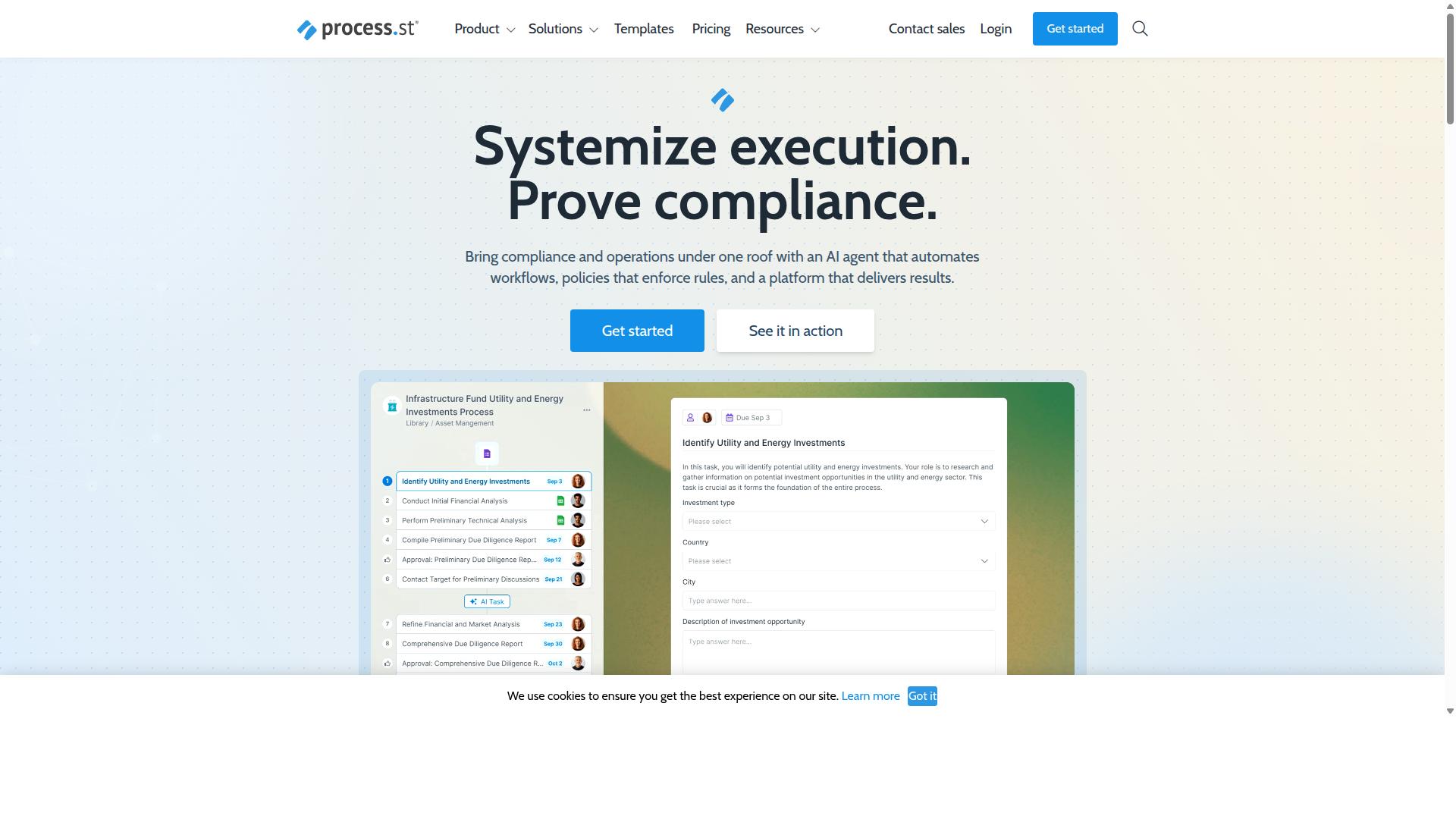
Process Street is a compliance operations platform that automates workflows and enforces policies with audit-ready proof. The platform serves organizations that need standardized processes and clear compliance documentation across multiple industries.
Three main products support these requirements. Docs handles document management and policy control. Ops manages workflow automation and process orchestration. Cora functions as an AI compliance and risk agent.
These tools work together to address the full process lifecycle. Organizations use the platform for process mapping, task automation, and process monitoring. The approach supports BPMN 2.0 standards through structured workflow creation and execution.
Process standardization becomes achievable through defined templates and automated checkpoints. Teams maintain process consistency while gaining process visibility across complex operations. This foundation supports business process management initiatives that require both execution capabilities and compliance evidence.
Why Process Street Excels at BPMN 2.0 Standards
Process Street supports BPMN 2.0 notation standards through its visual workflow builder and structured process mapping tools. These capabilities allow teams to create process models that follow established notation standards. Organizations gain a clear path toward consistent business process management across their operations.
Visual process mapping forms the foundation of BPMN 2.0 compliance. Teams can represent complex workflows through standardized symbols and shapes. This approach ensures that process diagrams remain readable and interpretable across different departments and stakeholder groups.
Standardized task sequences help maintain BPMN 2.0 notation standards throughout the process lifecycle. Each task follows defined patterns that align with established notation rules. This consistency supports process verification and validation activities.
Consistent process documentation practices ensure that BPMN 2.0 compliance extends beyond visual representation. Teams capture detailed information about process steps, decision points, and data flows. This documentation supports process governance and process standardization efforts.
Process modeling capabilities help organizations achieve better process visibility across their operations. Stakeholders can examine workflows from multiple angles and perspectives. This transparency supports process collaboration and process optimization initiatives.
Process execution features translate BPMN 2.0 diagrams into actionable workflows. Teams move from process design to process orchestration without losing notation standards. This seamless transition supports efficient process automation across the organization.
Process monitoring capabilities track adherence to BPMN 2.0 notation standards over time. Teams can identify deviations from established patterns and take corrective action. This ongoing oversight supports continuous process improvement efforts.
Process analytics provide insights into how well BPMN 2.0 compliance is maintained throughout the process lifecycle. Teams can examine patterns in process execution and documentation quality. This analysis supports process verification activities and helps maintain high standards.
Process integration features allow BPMN 2.0 compliant workflows to connect with other business systems and applications. Teams can extend their process models across different platforms while preserving notation standards. This connectivity supports process scalability as organizations grow their operations.
Process consistency emerges from the combination of visual mapping, standardized sequences, and documentation practices. Teams can replicate successful workflows across different departments and locations. This repeatability supports process efficiency and reduces variation in business process management practices.
Key Features and What Makes Process Street Stand Out
Process Street differentiates itself through integrated workflow automation and policy enforcement capabilities.
The platform combines document governance with executable workflows to support BPMN 2.0 standards across regulated industries.
Teams gain clear visibility into process execution while maintaining compliance requirements without manual tracking.
Three core products drive this approach: Docs handles policy documentation, Ops executes workflows, and Cora monitors ongoing compliance.
This structure addresses the full process lifecycle from initial design through continuous monitoring and improvement.
Workflow Automation and Process Orchestration
Ops workflows turn documented policies into AI-powered execution sequences with conditional logic and automated triggers.
Business process management requires more than static diagrams. Process Street converts policy documents into active workflows that teams can follow in real time.
Conditional branching allows processes to adapt based on specific conditions or outcomes during execution.
Task automation removes repetitive manual work while process orchestration coordinates activities across departments and external systems.
The platform connects with Zapier, Microsoft Power Automate, Tray.io, Make, and offers public API access for broader integration needs.
These connections support process standardization and ensure consistent execution across different tools and teams.
AI-Powered Compliance Monitoring
Docs maintains ISO 9001, SOC 2, SOX, and FDA compliance through continuous monitoring and automated audit trails.
Regulatory standards demand ongoing evidence collection and verification rather than periodic manual reviews.
Real-time compliance checks identify gaps before they become audit issues while automatic documentation captures required evidence.
Cora serves as the AI compliance agent that monitors regulations, automates work, and flags risks continuously.
This approach supports process governance requirements for organizations that must demonstrate adherence to multiple standards simultaneously.
Process visibility increases as compliance activities integrate directly into daily workflow execution rather than existing as separate tracking systems.
Pricing and Plans
Process Street offers three distinct pricing tiers designed for startups through enterprise-level deployments.
The Startup plan provides a simplified approach for smaller teams. This tier includes 5 users, 10 guests, and 100 automation actions per month along with unlimited workflows and tasks.
Teams working with BPMN 2.0 standards can create process documentation and maintain process modeling capabilities without restrictions on core workflow elements.
The Pro plan removes user limitations entirely. Organizations gain unlimited users and guests along with custom automation capabilities that support complex process orchestration requirements.
Process execution and task automation become more scalable as teams expand their business process management initiatives across multiple departments or locations.
The Enterprise plan delivers custom SLAs and SSO authentication. This tier provides advanced integrations, dedicated Success Manager support, and unlimited Public API access for organizations requiring process governance at scale.
Custom Data Set records and bulk document import features enable large enterprises to maintain process consistency across thousands of workflows while meeting strict compliance standards.
Personalized team training and process consulting services help organizations optimize their BPMN 2.0 implementations for maximum process efficiency and standardization.
Trust Signals
Process Street demonstrates reliability through security certifications and documented customer results.
Organizations seeking BPMN 2.0 compliance need platforms that maintain strict security protocols and prove consistent performance across diverse business environments.
Trust signals become essential when selecting tools for process governance, workflow automation, and compliance documentation. These certifications and success metrics directly address concerns about data protection and operational effectiveness.
Security and Compliance Certifications
SOC 2 Type II and ISO 27001 certifications confirm Process Street meets rigorous security and operational standards.
These certifications establish that Process Street follows documented procedures for data protection, access controls, and system monitoring. SOC 2 Type II certification covers security, availability, processing integrity, confidentiality, and privacy controls over extended periods.
ISO 27001 certification requires organizations to implement systematic approaches to managing sensitive information. This includes risk assessment procedures, security policies, and regular audits that verify ongoing compliance with international standards.
Process governance benefits from these certifications through standardized security practices that support audit readiness. Organizations can demonstrate compliance with regulatory requirements when they use platforms that maintain these certifications. The combination of SOC 2 Type II and ISO 27001 provides multiple layers of verification for business process management activities.
Process standardization requires secure environments where sensitive workflow data remains protected throughout the process lifecycle. These certifications support process visibility efforts by ensuring that documentation and process models stay confidential while remaining accessible to authorized personnel.
Customer Success Stories
IMCD UK achieved 75% reduction in setup time, and 49k+ employees across organizations standardized onboarding using Process Street.
These documented results show how Process Street supports process optimization through measurable improvements in workflow efficiency. The 75% reduction in setup time demonstrates that organizations can accelerate their process implementation significantly.
49k+ employees standardized onboarding indicates that Process Street scales effectively across large organizations while maintaining process consistency. This standardization supports BPMN 2.0 compliance by ensuring that process models follow uniform notation standards throughout the enterprise.
Process execution benefits from these documented improvements through faster deployment of standardized processes. The combination of reduced setup time, standardized onboarding, and accelerated documentation creates measurable advantages for organizations implementing BPMN 2.0 standards in their business process management initiatives.
Who Should Use Process Street
Operations, compliance, HR, finance, and IT teams in financial services, manufacturing, healthcare, and technology sectors benefit most from Process Street. These groups rely on business process management to meet regulatory requirements and maintain operational standards.
Process Street supports BPMN 2.0 notation standards, making it suitable for teams that need formal process modeling. Organizations in financial services use it for client onboarding workflows, while healthcare providers apply it to quality tracking procedures.
Manufacturing companies benefit from process mapping capabilities when documenting production sequences. Technology teams leverage task automation features to standardize development and deployment processes across multiple projects.
Human resources departments use Process Street for employee onboarding workflows that require consistent documentation. Finance teams apply the platform to create standardized approval processes that meet audit requirements.
Customer management and professional services organizations find value in process documentation features that ensure client deliverables follow established procedures. Real estate and property management companies use the platform for compliance workflows that track regulatory requirements across multiple properties.
IT and security teams implement Process Street for security protocols and system access procedures. The platform supports process governance requirements that these teams must maintain as part of their operational responsibilities.
Final Verdict
Process Street delivers a compliance-first workflow automation platform with measurable efficiency gains and global availability.
The platform combines BPMN 2.0 standards with practical workflow automation. This combination creates process consistency and process visibility across business operations.
Support is available through email and chat with a five-minute average response time. This quick access helps teams resolve issues during process execution and process monitoring without delays.
Customers can purchase through AWS Marketplace. This option simplifies procurement for organizations that already use AWS infrastructure.
Data residency choices include US, UK, Canada, EU, Australia, and UAE regions. These options support process governance and compliance requirements for global teams.
The combination of BPMN 2.0 compliance, responsive support, and regional data control makes Process Street a strong fit for process standardization and process orchestration needs.
Recommended Resources: